An Appreciation of Vilar Performing Arts Center

“Cutting edge” doesn’t even begin to describe the originality of Vilar Performing Arts Center, Beaver Creek Village’s signature underground concert hall, which celebrates the 30th anniversary of its groundbreaking in April 2026. Doug Rippeto, who oversaw the Vilar from 2004 to 2016, prefers to use another term.
“If somebody had come to you [in the early 1990s] and said, ‘Hey, we’ve got a great idea; we’re going to build a performing arts center, and we’re going to put it underground, where it has no visibility, and it’s only going to have 500 seats, and it will be in a resort town where very few people are going to be [year-round], and we’re going to put world-class entertainment in there, and after all that, we’re going to make it financially viable,’ [you would have said they] were absolutely crazy.”
But it was exactly that crazy idea Harry Frampton, managing partner of East West Partners, sold to billionaire investor Marc Rowan, whose Apollo Global Management owned a majority stake in the nascent resort in 1993. That was the year Rowan hired Frampton’s real estate development firm to energize the commercial core of Beaver Creek, which lacked a public gathering space more than a decade after its opening.
“Beaver Creek has no ‘there’ there,” Frampton recalls Rowan telling him at the time, tasking East West “to give Beaver Creek a heart.”
After several brainstorming sessions with stakeholders and master planning experts over six months, East West came up with a plan that included several elements: escalators connecting the resort’s base area to a lower-elevation village offering sophisticated boutiques and restaurants, an outdoor ice arena, and, as its centerpiece, a performing arts center.
Gordon Pierce, who had designed the then-under-construction Market Square Lodge, was hired as the concert hall’s architect. But there was one problem: With an ice arena taking up most of the village’s buildable footprint, there was nowhere to put a concert hall.
“I looked and looked…in Beaver Creek for a site and could not find an available or suitable location,” recalls Pierce, one of the original architects of Vail Village. “Then a lightbulb in my brain went on. I remembered reading about a building in the theater district in New York that was mostly underground.”
Pierce proposed locating Beaver Creek’s concert hall beneath the village’s ice rink.
“It is probably the most unusual structure in Colorado,” Pierce says. “No one has anything quite like the Vilar.”


Due to space constraints, he had to get creative. There wouldn’t be room for a conventional fly loft (latticework for lighting and equipment that usually extends high above the stage), so Pierce designed rigging for curtains and other technology that slid horizontally, rather than vertically. That meant expanding the footprint by excavating a 50- to 60-foot-deep alcove for the theater’s back wall without damaging the existing Hyatt Hotel, located near the site’s perimeter.
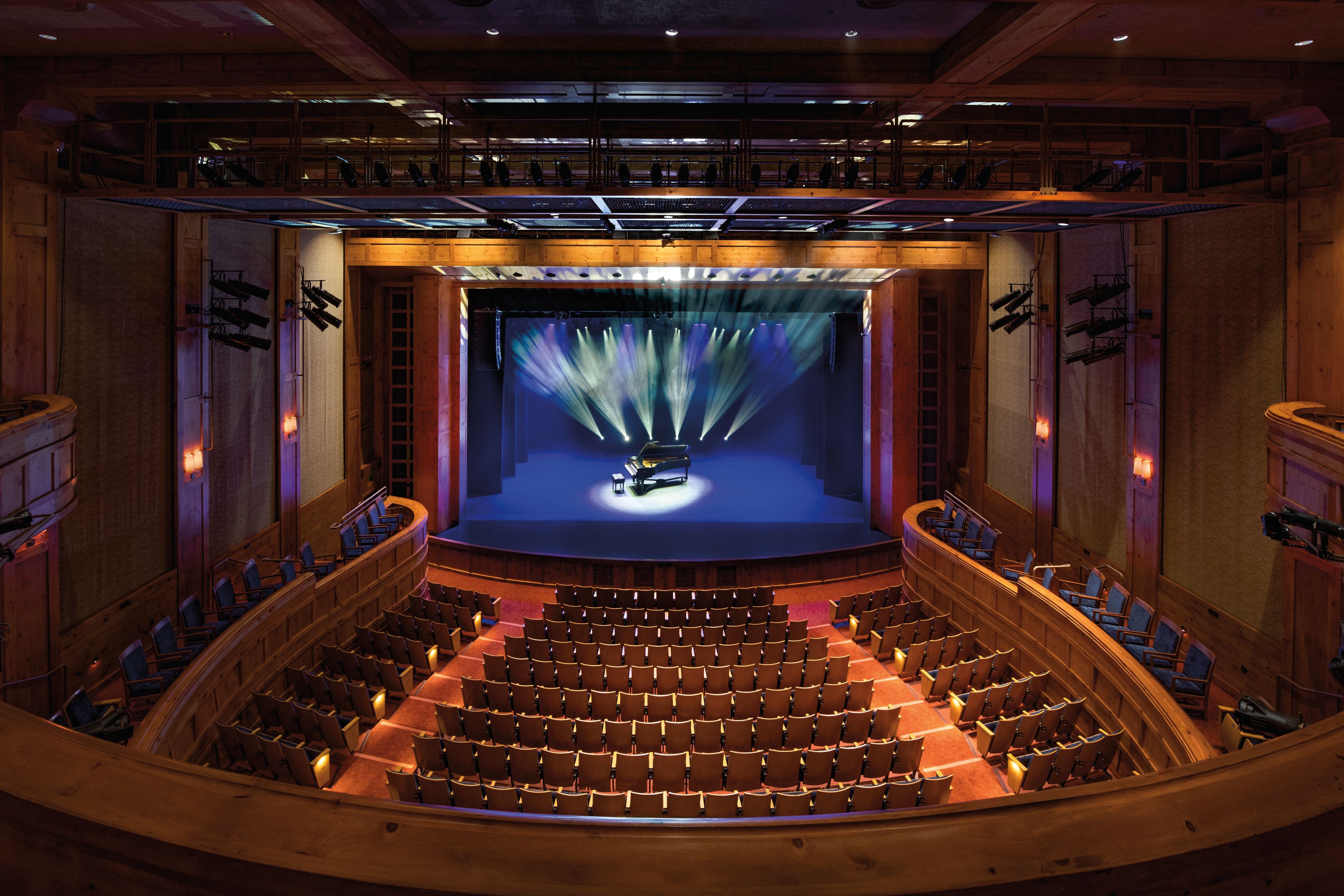
The design also required an acoustical engineer to devise a way to dampen the rumbling from the Zamboni that inevitably would be smoothing ice on the stage’s roof during concerts. Capacity also became a point of contention. To accommodate full orchestras, 800 seats would have been appropriate, but the resort in the 1990s didn’t draw enough visitors to reliably fill such a large venue. Planners settled on 530 seats, with about 200 on the upper level that could be closed off when ticket sales waned. The venue’s horseshoe layout, modeled after 19th-century opera houses (its old-world interior decor was inspired by Max Littmann’s 1908 Munich Art Theatre), ensured unobstructed sightlines within every seat and excellent acoustics. On the ground level, Pierce carved out an art gallery that could be repurposed as an intimate performance space for chamber music concerts and small ensembles.
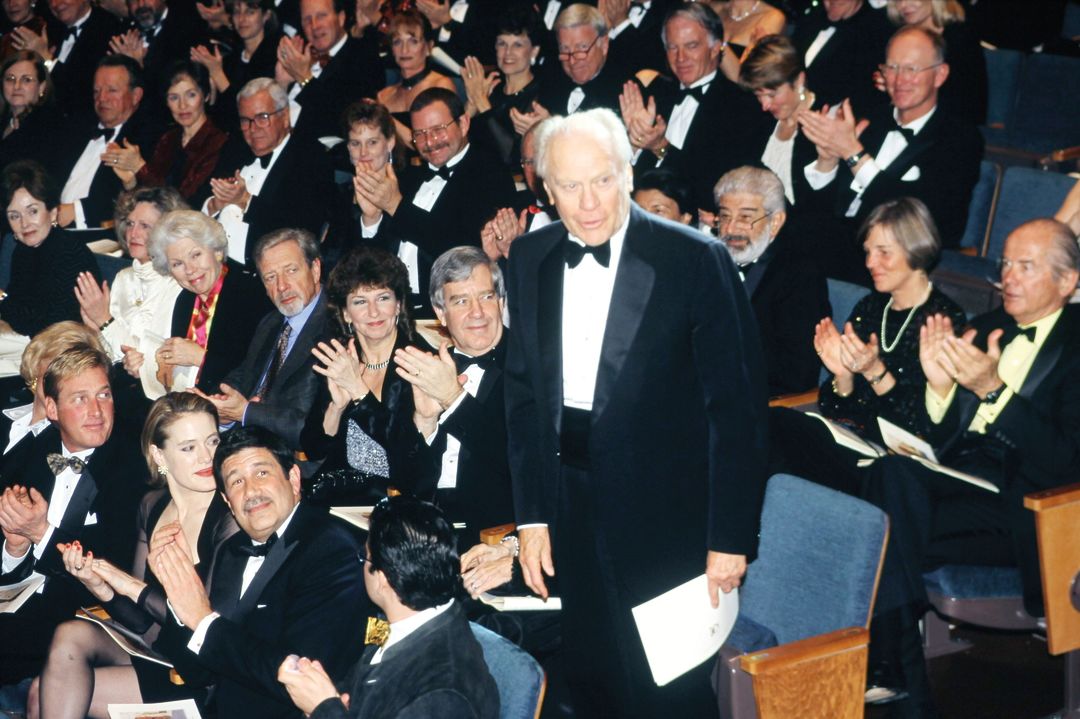
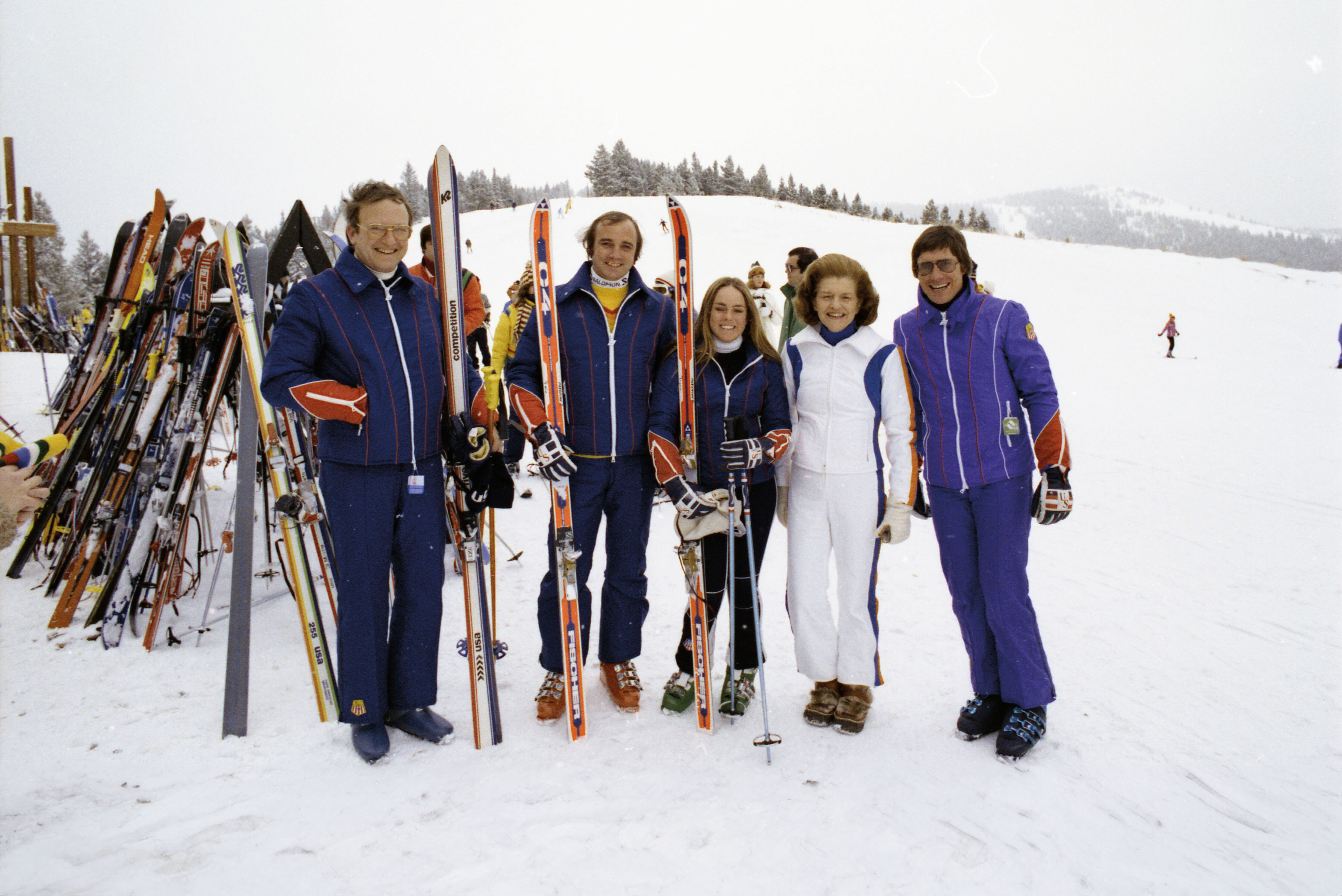
“This facility will serve to really finish Beaver Creek Village and will add to the cultural fabric of the Vail Valley,” former President Gerald R. Ford, who owned a home off a ski run named in his honor under the Strawberry Park Lift, said when the project was formally announced in 1995. By March 1996, the Beaver Creek Arts Foundation (BCAF) had raised 70 percent of the anticipated $18 million (approximately $37 million today) needed for the buildout, and construction began a month later, on April 8. In January 1997, Alberto Vilar, a philanthropist and opera aficionado who owned a home in Beaver Creek, anted up $3 million to secure naming rights. The Vilar, as it has come to be known (even after its namesake was convicted of investment fraud in 2008), opened on February 5, 1998, with a sold-out performance attended by Betty Ford (who donned a black gown and mink wrap for the occasion) and her tuxedo-wearing husband, who had cold-called patrons during the venue’s fundraising campaign, personally helping BCAF push the needle over the goal (“Getting a phone call from a former president to ask for a donation greatly helped our cause,” recalls Frampton. “Who says no to Gerry Ford?”).
Concertgoers were wowed.
“It was an engineering feat to construct a world-class performing arts center directly under a [then] year-round ice rink,” says Vilar Performing Arts Center committee chair Alexia Jurschak, who adds that the venue achieved the original goal of setting Beaver Creek apart from other mountain resorts, and believes that the Vilar still is unique in the world as the only ski resort subterranean performing arts center.
Onward and upward
Over the last decade, the Vilar has benefitted from ongoing and ever more elaborate improvements. For its 20th anniversary in 2018, the venue improved sound monitoring equipment, installed modern lighting systems and a new stage floor, and upgraded seating to include drink holders. For the Vilar’s 25th anniversary, the sound system was updated to meet the technical expectations of the most demanding rock touring artists, as were the concert hall’s acoustic banners (remote-controlled fabric wall panels that can be deployed to dampen sound during amplified concerts or rolled up to heighten the warmth of the room’s sound for orchestral performances). LED wash fixtures were also installed over the stage for an ambient glow, along with other lighting effects to enhance dance performances. And a contemporary glass chandelier crafted by Dale Chihuly was finally installed over the upper lobby’s spiral staircase; original developers had planned it for the 1990s, but the budget ran dry.

Other renovations, unveiled in 2025, include a refreshed upper-level bar (double the size of the temporary one). The curved synthetic quartzite bar, designed to mimic the organic flow of the nearby Chihuly chandelier, also has a practical function: it provides multiple serving areas to minimize wait times for thirsty concertgoers. A cozy bistro seating alcove near the bar replaces an unsightly coat rack and gives patrons a place to relax, while a discreet cloak room has been added to check wraps, as well as ski boots.
“With its seating, the alcove becomes a dynamic space,” says Kit Austin of Vail’s Pierce Austin Architects, which oversaw the upgrades. “It feels like it was always meant to be there. It’s a great long-term addition to the bar.”
Vilar Executive Director Cameron Morgan says the feedback about the new bar and seating area has been overwhelmingly positive.
“Some guests have commented that they can’t believe it took this long to place a permanent bar in the upper lobby, or they share how they remember when the bar service in the upper lobby used to just be coolers of beer in the middle of the space,” he adds.
In addition to lobby enhancements, the Vilar also upgraded spaces the paying public never sees, unless they are lucky (or well-connected) enough to be invited backstage by the talent: the green room and dressing rooms. Designed for a less demanding clientele, the rooms were rather unrefined by today’s standards.
“Since [1998], expectations have shifted toward comfort, privacy, and technology,” Morgan says. “We set out to ensure every aspect of an artist’s experience at the Vilar matches the quality of what happens on stage and aligns with what our audience experiences in the house.”
Without windows, the below-grade dressing rooms offer no natural light. Instead, flat-panel, sleek LED-lighted mirrors with various color tones and brightness have replaced outdated incandescent perimeter lightbulbs; makeup tables can now be folded away and lightweight chairs stacked to create a larger, multipurpose space for both artists and community events.
In the green rooms, dated (and worn) orange carpeting has been replaced with blue high-wear fabric panels that can be easily swapped out when stained. Other upgrades include a kitchenette with a refrigerator, a microwave, service space for food and beverages, and a modular sectional sofa with storage underneath. The whole setup can be reconfigured for various uses and sensibilities.
“We are regularly told by performers that the Vilar is one of the best acoustic venues they have ever played in, and we have continually strived to remain current in that regard,” Jurschak says. “Our recent upgrades…make the environment more current, elegant, comfortable, and inviting while maintaining the classic appeal of an old-world European feel.”
Like the wood paneling in the new bar area and green rooms, which reference the 1998 concert hall’s classic knotty pine panels and blue color scheme, the Vilar remains, in a word, timeless.
“The original design fits the alpine setting of Beaver Creek perfectly,” says Morgan. “We selected the designs and materials for these projects that echo our core visual palette: organic, natural, sophisticated, and enduring.”
Future renovation plans include a more welcoming entrance with ambient lighting, as well as replacing creaky 1990s-era escalators that conduct concertgoers to and from the venue. Other anticipated projects include additional public restrooms and continued conversion of theatrical lighting to LED. Counting the most recent work, Morgan says the Vilar will invest more than $7 million in capital improvements through 2030, touting the venue’s ROI: an economic impact that exceeds $22 million annually in Eagle County.
Editor’s note: Some information and quoted material in this story derives from the author’s 2023 reporting published in Beaver Creek Magazine and a commemorative booklet published by the Vilar Performing Arts Center/Vail Valley Foundation.