Vail Ski and Snowboard Academy Mints Olympians

Image: Ryan Dearth
Bouncing lightly on a couch in the principal’s office this fall, Bowen Seelig looks like any other sixth-grade girl, her light-brown hair tied back in a ponytail. But ask her what she wants to be when she grows up and the 11-year-old reveals a competitive athlete’s steely resolve. She’d like to ski in the Olympics one day, she says, but right now her immediate goal is a backflip on skis. A boy on her team nailed his last year, and that inspired her to do the same this winter. “I just have to commit to it,” says Seelig, who competes in mogul-skiing competitions and trains with Ski and Snowboard Club Vail (SSCV), the local club that produced Lindsey Vonn and Mikaela Shiffrin. “And I probably have to practice more.”
Fortunately, Seelig will have ample time to work on her backflip and more this winter. That’s because she recently transferred from Edwards Elementary School to Vail Ski and Snowboard Academy (VSSA) in Minturn, where, as she explains, “You get to do your sport in the mornings, and then you get to do school in the afternoon.”
At her old school, Seelig would often miss class on Fridays to travel to weekend competitions around Colorado, then have to catch up on her own with schoolwork. Now, she says, she’s “way more excited, because it’s not like, ‘Bowen, you’re leaving again!’”
Part of the Eagle County School District, VSSA was the nation’s first public snowsports academy when it was founded in 2007 and is still the only public school in the country that revolves its curriculum around the training schedules of student athletes. One of the best parts? Unlike similar but private institutions—schools like Vermont’s Burke Mountain Academy, Rowmark Ski Academy in Utah, or even the Vail Mountain School—tuition at VSSA is free. (Other expenses are not, however. In addition to annual SSCV dues—which can easily rise into five figures for advanced programs—all students are required to pay an annual academic coaching fee of $1,000 for middle schoolers and $1,200 for high schoolers.)
Comprised of grades 6 to 12, with a current student body of 255, the school is in its 18th year of ensuring that competitive skiers and snowboarders—as well as some 50 hockey players and a handful of figure skaters, gymnasts, and swimmers—succeed both athletically and academically. The only prerequisite? Committing to the training and competition schedule of a full-time elite athlete.
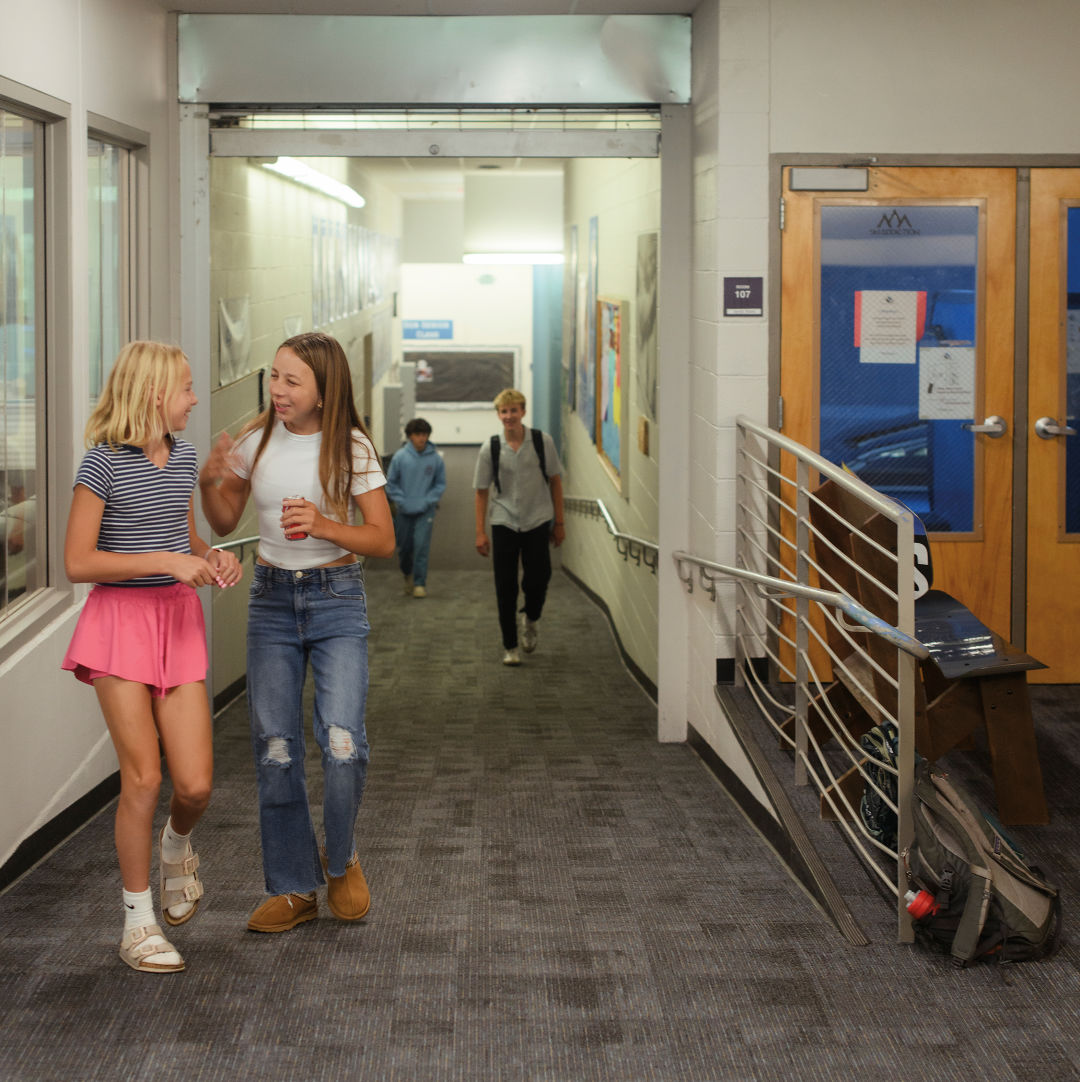
Image: Ryan Dearth
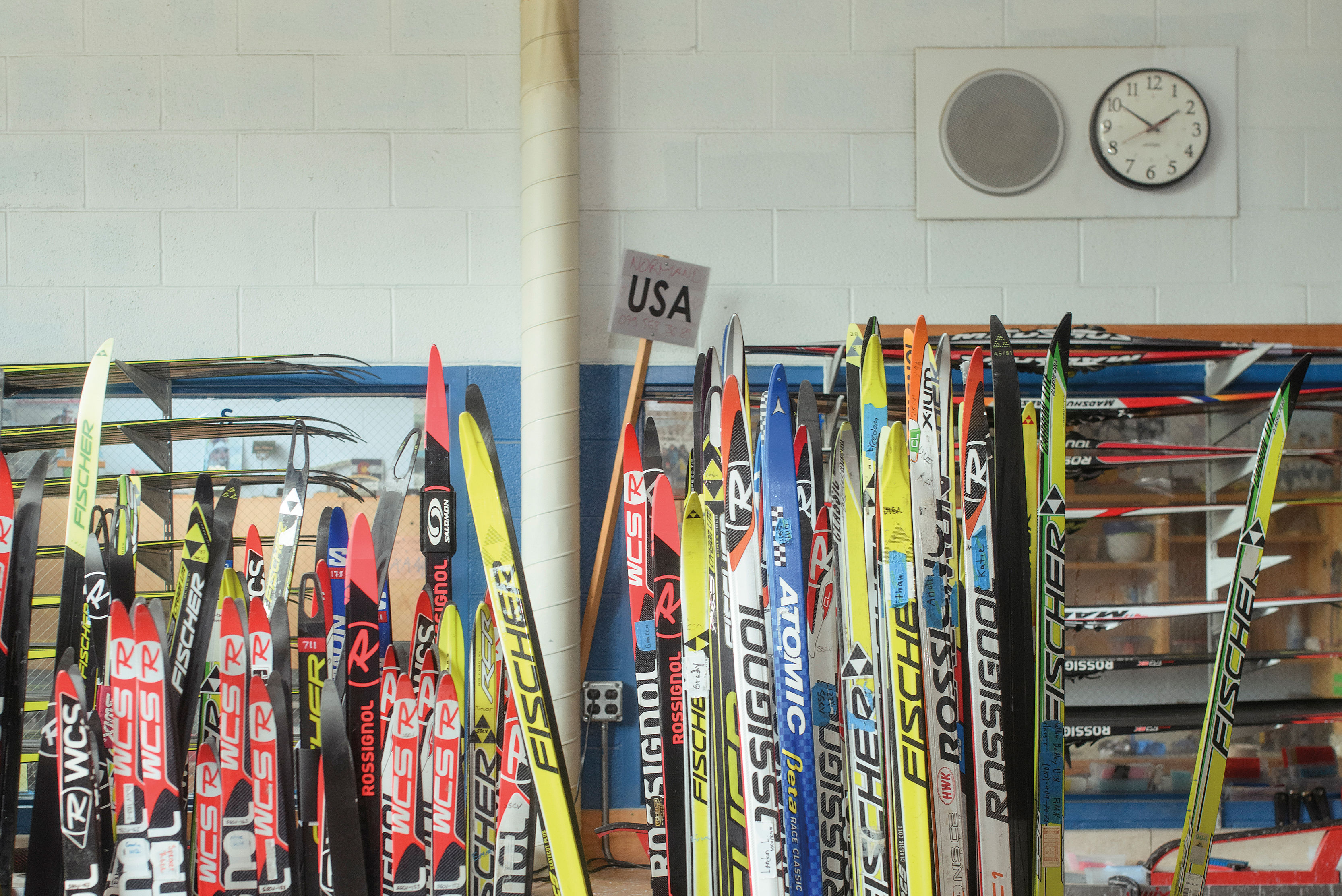
Yet it’s no academic slouch, either. In 2025, U.S. News and World Report ranked VSSA seventh among public high schools in Colorado, with a 98 percent graduation rate and a college readiness score of 85 (the state’s second highest). VSSA students “have big goals academically and athletically,” says Kari Bangston, who has taught at the school since 2014 and is in her first year as its principal. They also get to attend a school in an extraordinarily scenic setting (Minturn’s Maloit Park), with a different set of amenities than the typical public institution. Rather than a football field and track, for instance, an 11-kilometer network of groomed Nordic ski trails loops through stands of conifers and aspen groves around the school’s campus, which lies just south of Minturn on 35 acres abutting the White River National Forest. Inside a former music room, instead of rehearsing for the band, students are throwing backflips on two seven-foot flybed trampolines or practicing tricks in a foam pit before taking them on snow.
The school gym not only contains additional trampolines but also an indoor climbing wall, street hockey nets, and—on what was once a stage for assemblies (VSSA used to house Minturn Middle School)—a wooden half-pipe for skateboarding. Students also regularly work out on the latest weight training and cardiovascular equipment in the Human Performance Center at the Minturn Fitness Center, just down the road, which opened in 2014 as a $2.5 million collaboration between SSCV and the Town of Minturn. “Because of our partnerships, we have facilities most schools don’t,” Bangston says.
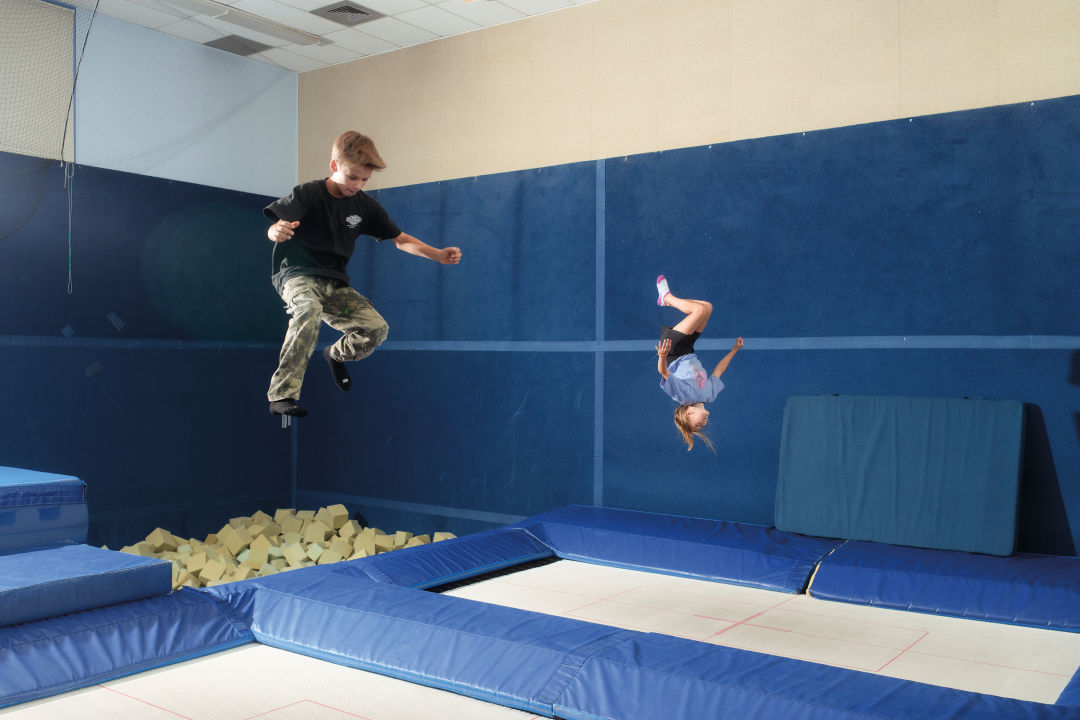
Image: Ryan Dearth
The school’s athletic focus has certainly yielded tangible returns. Fifty-four percent of students compete in their sport after high school, 20 percent have been named to a national ski or snowboard team or competed at a prestigious international event, and 13 VSSA alums have competed in the Olympics.
“If you open any classroom door, you’ll find a really talented athlete,” observes social studies teacher Matt Steninger. As a result, an undercurrent of potential greatness buzzes through the school; the kid next to you in math class could be a future Olympic gold medalist or World Cup champ. During a recent tour of the school, Bangston asked a classroom of middle-school-age kids, somewhat rhetorically, “How many people’s goal is to make the Olympics?” About half raised their hands.
A concept takes hold
Before the school’s launch, academic programs for serious local athletes were developed gradually, beginning in the early 1990s. “When I was in high school, the precursor of this program had tutoring during the winter, with two kids per teacher,” recalls Sarah Schleper, the six-time Olympic Alpine skier who grew up in Vail.
When Ski and Snowboard Club Vail and the Eagle County School District created VSSA in 2007, the academy served high schoolers only, in a space shared with Minturn Middle School. In 2010, sixth to eighth graders could attend and in 2011, fifth graders were added (though as of this fall, VSSA returned to sixth graders and up). At first, the academy’s sixth to eighth graders met at Minturn Middle School, while ninth through twelfth graders attended Battle Mountain High. When Minturn Middle School closed in 2011, VSSA took over the whole building.
While VSSA covers the academic side, SSCV oversees training for the school’s Alpine and Nordic skiers and snowboarders (other athletes work with local clubs relevant to their disciplines). This combination is a potent draw for families from outside the school district and even out of state. Bangston estimates that about 25 percent of VSSA’s students moved to the Vail Valley with their families to attend the school.
“If I could design a school, this would be it,” says Assistant Principal Ryan Cronshaw, who is in his first year at VSSA after working in the Denver public school system for almost a decade.
A different breed
Another indication that VSSA is an atypical public school: its mascot, Lloyd the Yeti, a mythical snow beast. Reminiscent of Ted Lasso, signs bearing the staff motto, “We Believe,” are hung around the school, reflecting both optimism for student success and a sly reference to the school mascot. It could also be a mantra for calm in the face of potential chaos. “There are 255 kids going in 255 different directions,” says Bangston. “The communication and collaboration [here] are just truly one of a kind.”
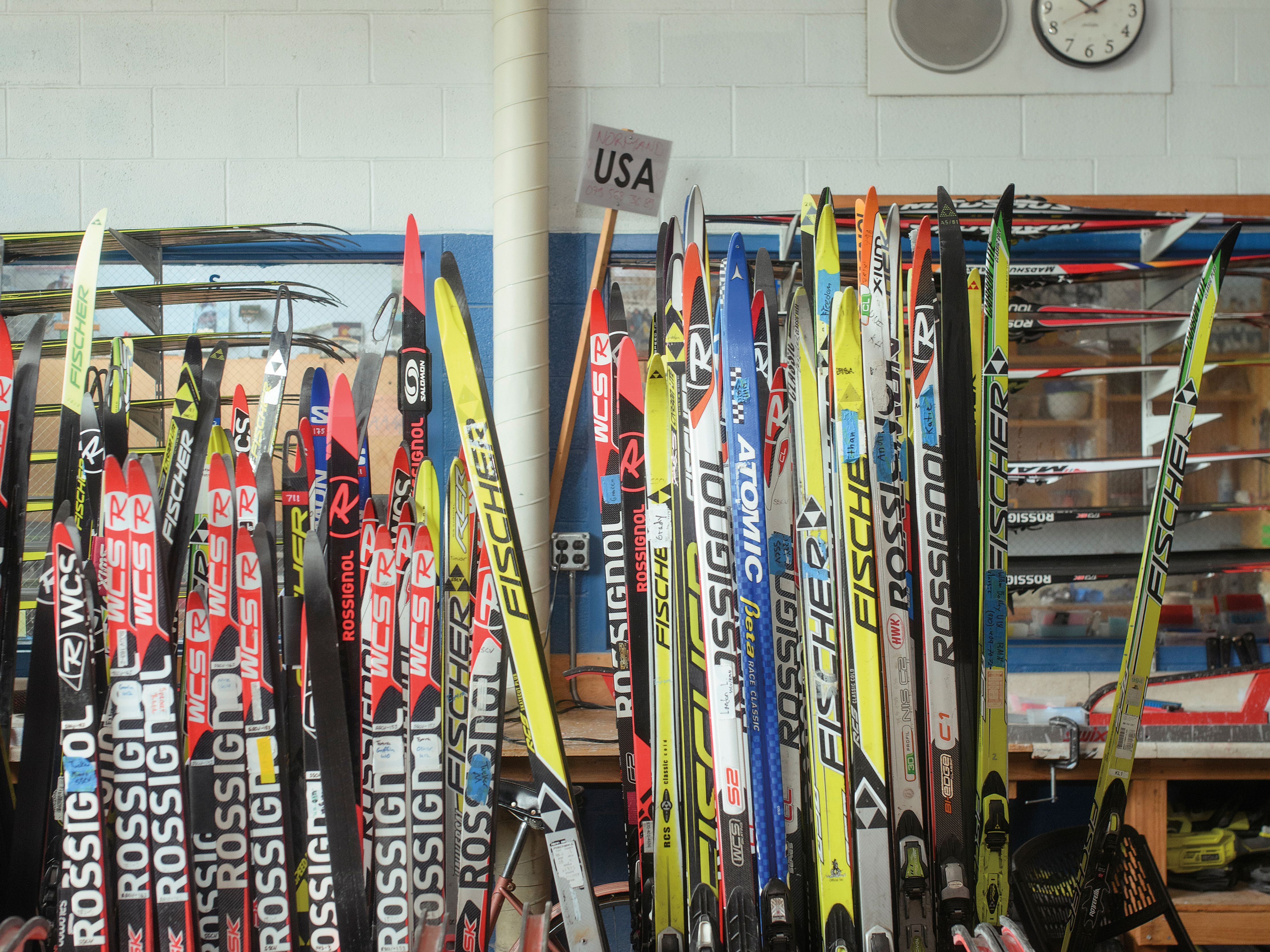
For the first 10 weeks of school in the fall semester, classes follow a traditional academic schedule (though a handful of students are already off training in the Southern Hemisphere). Before classes begin, students are likely to work with coaches at the Minturn Fitness Center a couple of days each week; after school lets out, they’ll do dryland training, whether hiking or running on the nearby trails or maybe playing soccer.
In November, the schedule switches to winter, and the tempo of the school changes as after-school athletics become pre-class commitments. Excepting Mondays, which are devoted to in-school academics, VSSA skiers and snowboarders are loading onto lifts at Vail Mountain early in the morning, while other athletes train at their respective sports. By 1 p.m., all students are in the classroom, studying until 5 p.m. Come May, the schedule returns to the fall format for the final weeks of school.
Image: Ryan Dearth
To keep things running smoothly requires next-level organization, with VSSA teachers as the fulcrum around which everything revolves. “We have a master list of what coach is taking which kids where and when, and then we communicate that to the teachers,” Bangston explains, while noting that a teacher may easily have kids competing in eight different sport disciplines in one class. Using an online platform to communicate with students and track coursework, teachers post upcoming assignments at least a couple of months in advance, and students are responsible for keeping up with their work when traveling.
The truncated classroom time has its advantages too. A desire to maximize student-teacher interactions in the classroom has recently influenced VSSA’s pedagogy. “When we have the kids in front of us, how can we leverage that higher-level thinking, and then when they’re away from us, what can they be doing to build their knowledge base?” asks Bangston. The rationale is that students can access information on their own, so class time should focus more on analysis and critical thinking through conversation and collaboration. “One of our huge initiatives as a staff has been, in its simplest form, how do we talk less and allow the kids to think more, knowing that our time with them to do that is more limited?” notes Bangston.
Getting a handle on it
Time management can be a struggle for teenagers, and elite athletes are no exception. Throw in intense athletic training and frequent travel, and it’s easy for even the most dedicated and gifted students to get derailed. That’s why VSSA offers students ample support, from both teachers and peers. (Even the extra nutritional needs of athletes are addressed. Rather than standard cafeteria fare, VSSA kids are served nutritionally dense lunches like Asian chicken wraps, chicken-fried steak, or beef and broccoli over rice, all prepared daily by the school’s chef in a lunchroom that’s dubbed “The Training Table.”) Says Bangston, “Teachers know the kids, know their sports, and understand the rhythms of where they go and where they’re traveling. That relationship is truly key to our school’s foundation and allows it to thrive.”

Image: Ryan Dearth
“The students at VSSA are all very friendly and supportive of one another,” agrees Ollie Martin, a senior who is one of the country’s top snowboarders. “We all have very similar goals and priorities, so it’s easy to talk to and get to know others.”
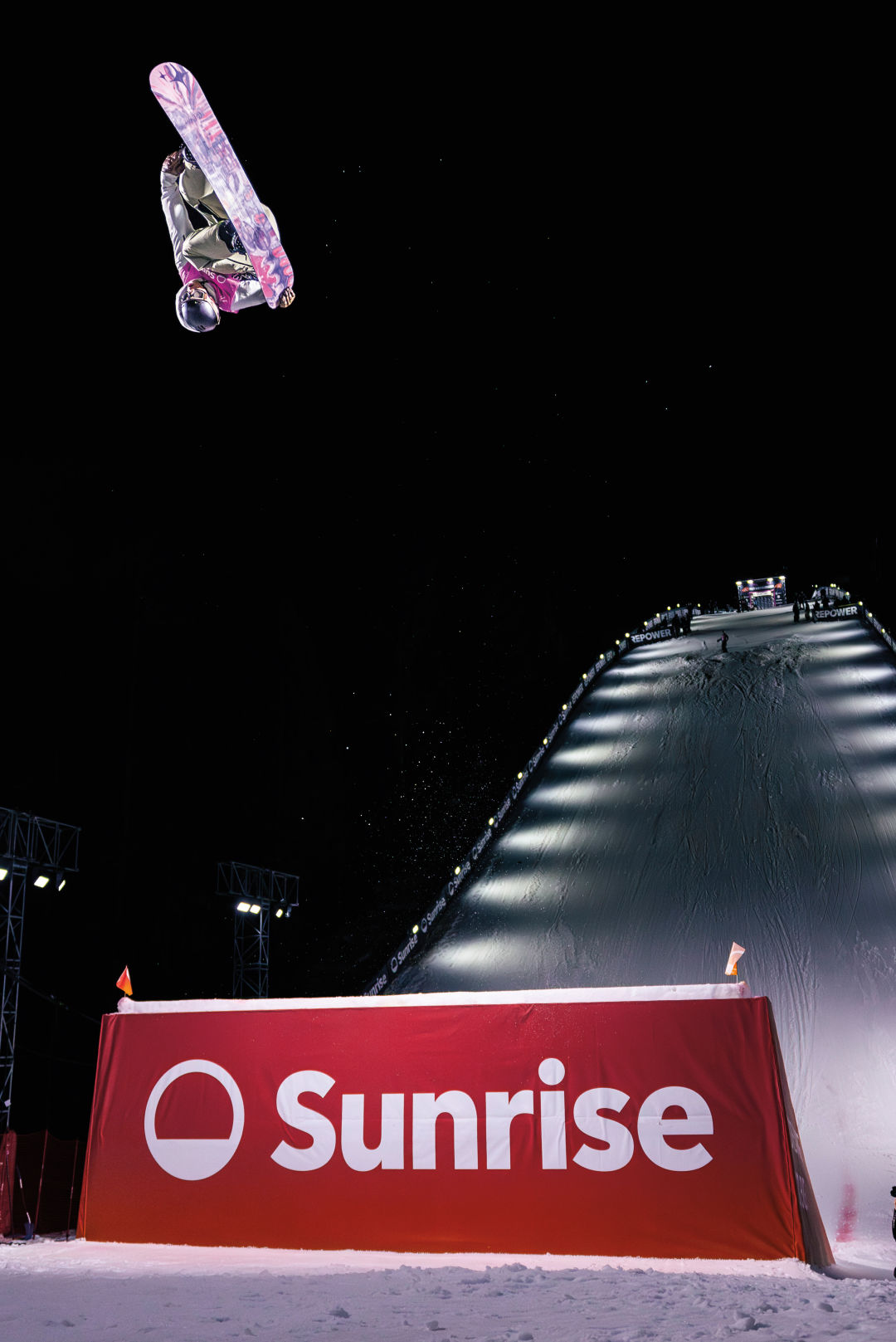
Image: Ryan Dearth
A few days each week, students attend 30-minute seminars, which range from SAT prep to working on college applications to planning service projects. On a Wednesday during the recent fall semester, the ninth and tenth graders filed into the gym and settled into folding chairs for their seminar time, while three seniors sat before them: snowboarders Keira Lahiff and Beckett DePriest and Alpine skier Shay Armistead. It was a chance for the younger high schoolers to ask their older peers how they balance athletics and academics, in the hopes of picking up a few hacks. To keep things moving, the kids had submitted questions in advance, and a teacher read them aloud. Among the queries: “How do you stay organized?” (Google calendar); “Do you complete schoolwork before or after a trip?” (the answers varied); and “What’s your proudest sports moment?” (“Making the World Cup,” said Lahiff).
And some of the questions could have applied to any high schooler. When asked about his biggest academic regret, DePriest (whose older brother, Brooklyn, graduated from VSSA in 2024 and is in his second season on the US Snowboard Team) said, “Messing around my freshman year.”
Above all, navigating VSSA’s routines in the classroom and on the ski hill requires a level of personal responsibility and communication skills that may not come naturally to teens but will serve them well for life. “The more communication there is with their teachers and their coaches and their parents, the more we can really support them, even though their schedules are nontraditional,” Bangston says.
The school distributes checklists to help kids stay on top of assignments and travel plans. Moreover, the consequences of not maintaining at least a C in each class (or a 2 in the school district’s grading scale) extend beyond a report card; if students can’t improve their grades after two weeks, they must attend a morning study hall instead of training in their sport.
It turns out that staying organized—the daily tracking of specialized gear, longer-term planning required when traveling—also hones executive functioning skills in VSSA kids. That often makes the eventual transition to college seem easy (many VSSA grads also take a gap year to compete between high school and college). Says Bangston, “Our kids really thrive as they take on this autonomy and responsibility that’s necessary for them to navigate all their things. I think that’s a huge gift and a benefit of being a student athlete.”
Standout students
VSSA’s athletic roster, past and present, rivals that of any private ski and snowboard academy. Alums include US Freestyle Team mogul skiers Tess Johnson (the 2025 dual moguls world championship silver medalist) and Kai Owens (a 2022 Olympian); freestyle skier Aaron Blunck (a three-time Olympian, four-time X Games medalist, and two-time halfpipe world champ); and Alpine skier Bridger Gile, a seven-year member of the US Ski Team and 2020 NorAm overall champion.
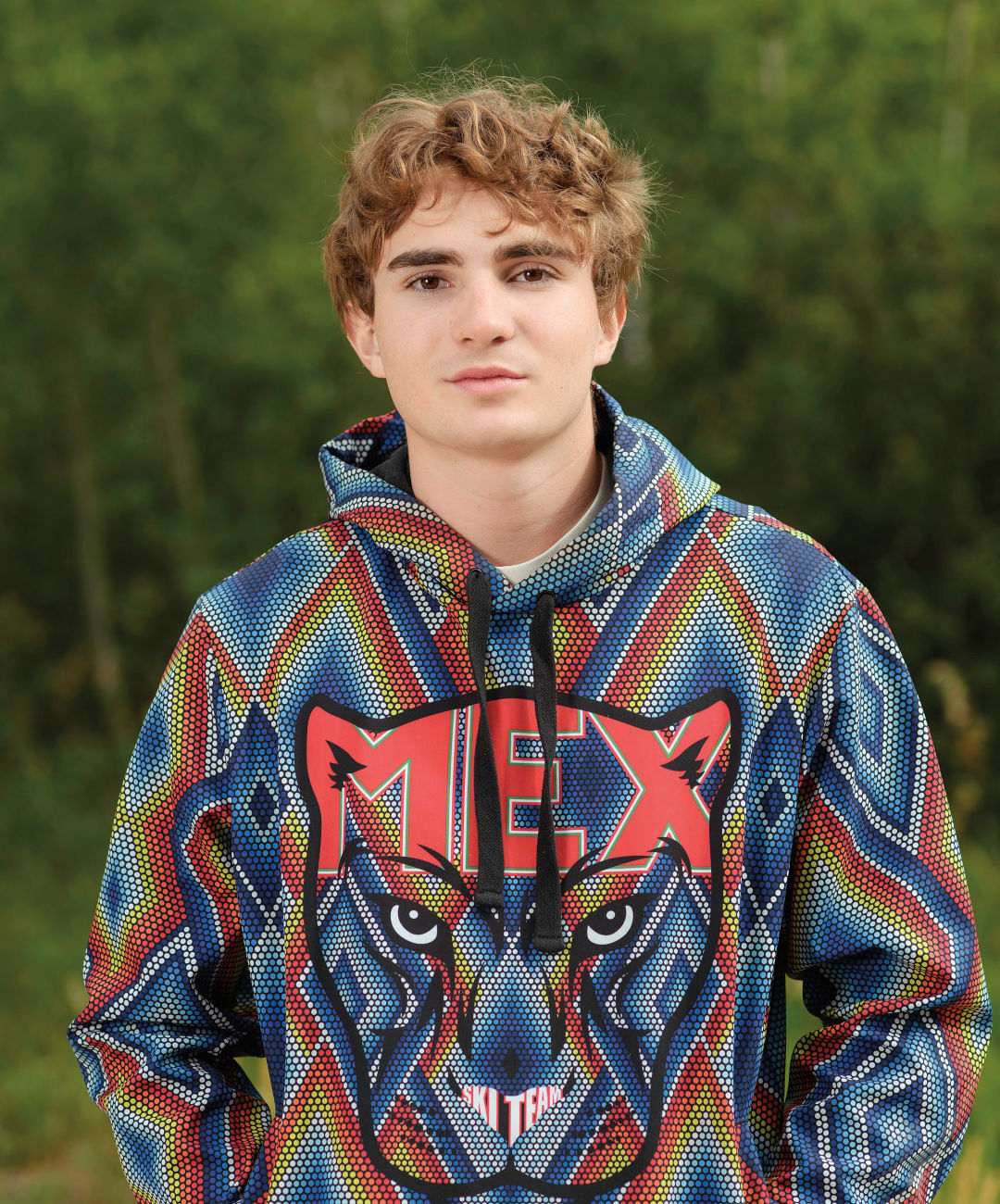
Image: Ryan Dearth
Notable current students include 17-year-old Lasse Gaxiola, a senior who skis for the Mexican ski team (his father is from Mexico) and is trying to earn a spot at the 2026 Winter Olympics. In doing so, he’d be carrying on a family legacy. His mom, Sarah Schleper, skied in four Olympics for the US and two for Mexico (after marrying Federico Gaxiola, she obtained Mexican citizenship in 2014). Now, Schleper coaches for SSCV, while Federico coaches Lasse. Schleper, 46, also wants to earn her own berth on Mexico’s Olympic team, setting up the potential—and rare—scenario of mother and son racing together for Olympic glory.
Lasse transferred to VSSA as a sophomore after trying to juggle school and skiing elsewhere. “It’s way more welcoming here,” he says. “Skiing is tough, but we all suffer together.” He usually travels a week or two each month to train and compete, but last winter he spent three consecutive weeks in Europe. Catching up with schoolwork for that time required a lot of effort, he says, but the system of having all his assignments and class expectations online allowed him to do half of the work while abroad and the other half when he returned.
His dad notices a difference in the “level of happiness and calmness” in Lasse and his sister, Resi, a figure skater who is in seventh grade at VSSA. “I felt like [my kids] knew something I didn’t know,” says Federico. “There’s so much accountability, and you see them grow.” Schleper agrees, though she admits to sometimes wishing for more arts and theater education at the school.

Image: Ryan Dearth
Currently, VSSA’s highest-performing athlete is 17-year-old snowboard standout Ollie Martin. He had a breakout year last winter while competing in his first season on the World Cup circuit. Martin became the youngest snowboarder to win a World Cup slopestyle event, in February 2025, and won two bronze medals in slopestyle and big air at the FIS Snowboard World Championships in Switzerland the next month. Even more remarkable: months earlier, in Fall 2024, Martin was the youngest rider to land a 2160 (that’s an astonishing six revolutions in the air) and the only one in the world to do the trick both frontside and backside. Most impressive: He does all this while maintaining a 4.0 GPA, which includes college-level calculus coursework.
Barring something unexpected, Martin should be at the Olympics in Italy come February, where his goal is to earn a medal. “He has the potential to be the first active student at VSSA to win an Olympic medal,” says Bangston.
Born in New Zealand and a Vail Valley resident from age 2, Martin has attended VSSA since fifth grade. “The ability to have fun [i.e., train on snow] with friends each morning and then head to school in the afternoon is wonderful,” he says. His older brother, Kade, graduated from VSSA in 2024 and is also on the US Snowboard Team, riding halfpipe.
Martin’s schedule this winter includes training camps in Australia, New Zealand, and Europe, followed by competitions in China, the US, and Switzerland, and, he hopes, Italy, at the Winter Games. “In a typical day [at a training camp],” explains Martin, “I wake up, do my morning routine, and head up to the hill at around 8:30. Then I visualize [the course] and warm up. I usually ride until around 2. I go to the gym, then come home and do school for the rest of the day.”
Fitting in academics, he acknowledges, is difficult, but he appreciates the advantages VSSA offers students. “It gives them the ability to pursue both their sport and education fully,” Martin says.
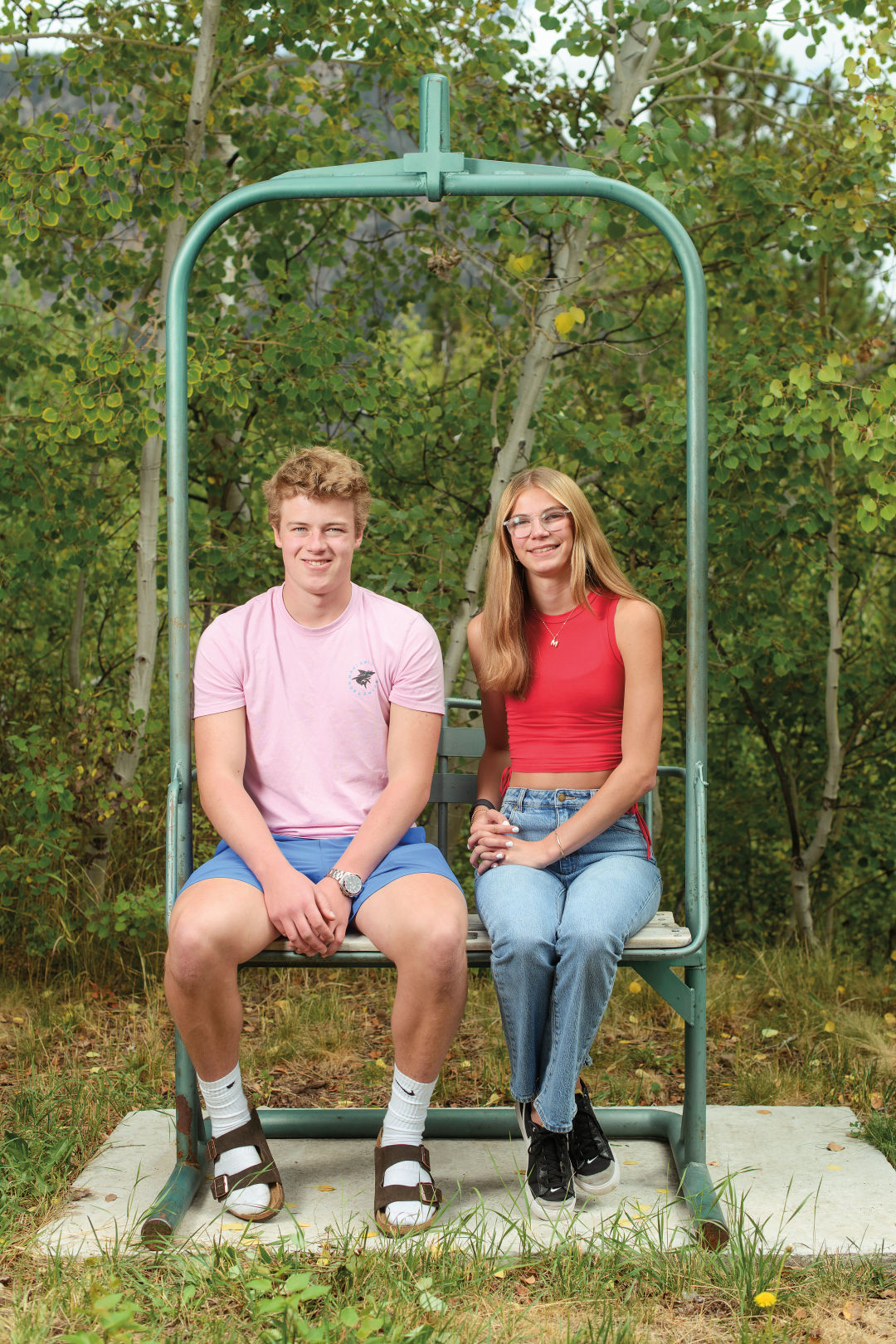
Image: Ryan Dearth
Alpine skiers Meg and Spenser Gustafson moved to Vail with their family from Edina, Minnesota, in 2020, during the pandemic, to train with SSCV and attend VSSA. One reason: Meg, a junior, is visually impaired. The siblings have both skied competitively for years, though Meg’s vision has been a challenge.
“Sometimes I can see the gates, especially in giant slalom, where there is a panel,” she explains. “I do a really thorough inspection, and I memorize every gate of the course, along with the terrain and where I’m going.” She relies on course reports from other racers and her coaches for snow conditions.
Now 16, Meg is old enough to qualify as a paraskier under International Ski and Snowboard Federation Skiing regulations, which means she can enter paraskiing races, with Spenser, 18, as her guide. Last year, the duo practiced as a team while forerunning a few para races and pairing up for Meg’s downhill race in the U16 Rocky Central Championships in Vail last March.
With the 2026 Paralympic Winter Games in Italy as a goal, the siblings will be on the road together for much of the winter. For now, Spenser, a senior at VSSA, is putting his individual ski racing ambitions on hold. “Meg has a great opportunity,” he says. “I’m going to help her try to achieve it.”
For inspiration, Meg didn’t have to look far. Audrey Crowley, who competes on the US Para Alpine Ski Team and won the US Para National Championships in 2021, graduated from VSSA last spring.
Back in the principal’s office, Bowen Seelig is preparing to return to class after sharing her backflip aspiration. “Have you met Ava Keenan yet?” Bangston asks her. “She skis moguls, and she’s a sophomore. She’s in Australia right now training, but she got her backflip when she was about your age, and she was featured in a Warren Miller film. We’ll have to make sure that you meet.”
For an 11-year-old aspiring Olympian, that’s magic that can only happen at VSSA.

Image: Ryan Dearth